

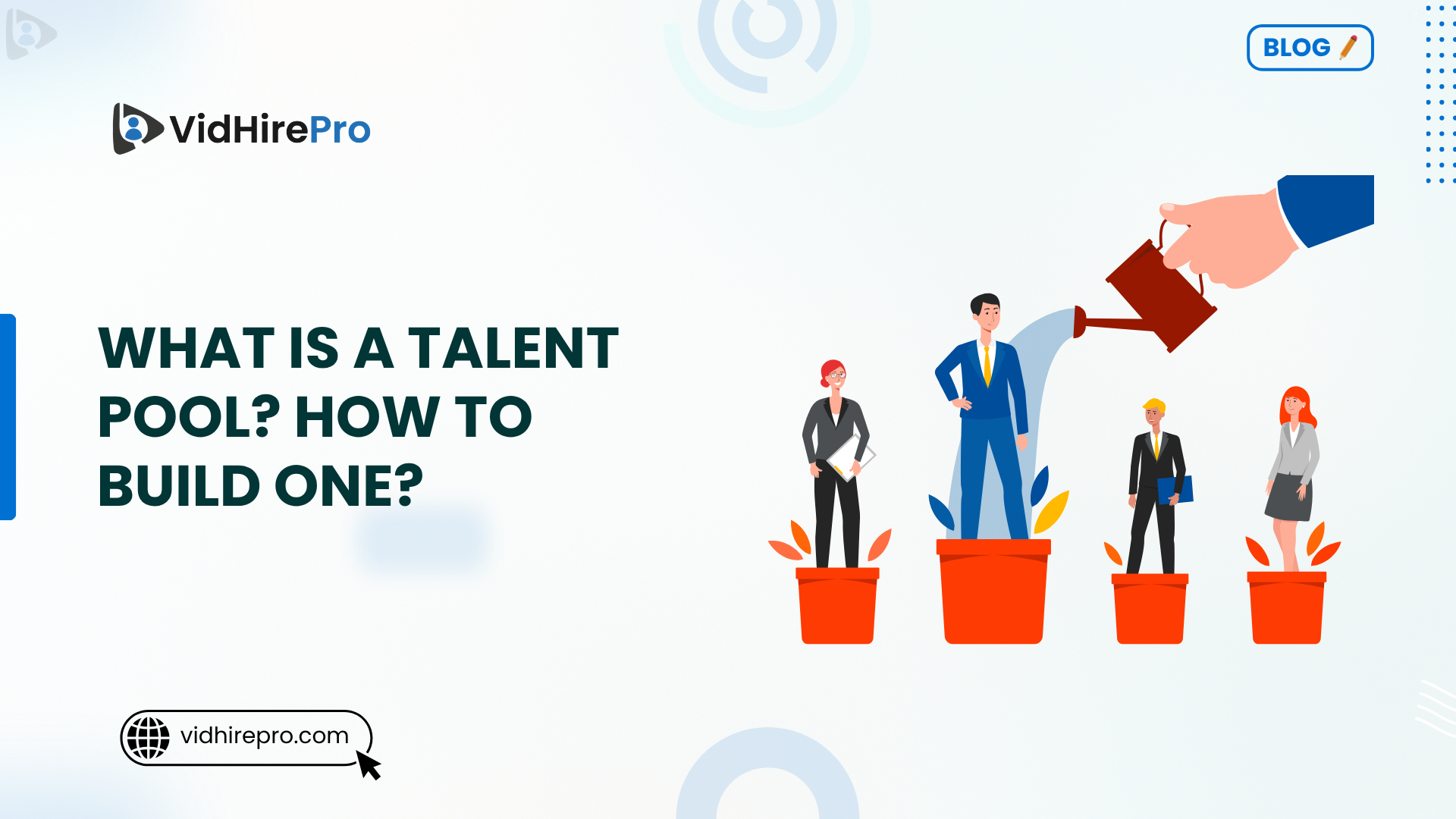
Every time a recruiter posts a job and waits for applications, they are accepting a preventable delay. The best candidates for your next open role may already exist in your previous applicant data, your employee referral network, or your LinkedIn outreach history. A well-managed talent pool turns that latent potential into a ready-to-activate hiring asset.
This article defines the talent pool, explains who belongs in one, how to build and maintain it compliantly, and how video interview data transforms passive candidate records into actionable hiring intelligence.
Talent Pool Definition
A talent pool is a curated database of internal and external candidates with the skills and qualifications relevant to current or future roles within an organization. It is a proactive approach to talent acquisition. Rather than sourcing from scratch every time a position opens, organizations build and maintain relationships with potential hires before the need becomes urgent.
Talent pools vary in depth and structure. Some are broad collections of interested candidates; others are tightly segmented by role type, skill level, or business unit priority.
Internal vs. External Talent Pools: What’s the Difference?
An internal talent pool consists of current employees who have been identified as candidates for advancement, lateral moves, or succession into leadership roles. Managing this pool is closely tied to workforce planning and organizational development goals.
An external talent pool consists of people outside the organization, past applicants, candidates sourced through outreach, referrals, alumni, and contractors who have expressed interest in working for the company or who recruiters have identified as strong potential fits.
Most organizations benefit from managing both, ideally through the same platform.
Talent Pool vs. Talent Pipeline vs. Candidate Pipeline: A Clear Comparison
The terms are often used interchangeably, but they describe different levels of engagement and intent:
- Talent pool: A broad, relatively passive group of potential candidates who have been identified and stored but not necessarily actively engaged for a specific role
- Candidate pipeline: A more actively managed, role-specific group of pre-screened candidates being nurtured toward an anticipated or open position
- Talent pipeline: Often used in a strategic workforce planning context to describe a long-term succession-focused pool of high-potential employees or external leaders
Think of the talent pool as the reservoir, the candidate pipeline as the channel, and the hire as the outcome.
Why Do Organizations Build and Maintain Talent Pools?
A talent pool is not just a convenience; it is a structural competitive advantage in talent acquisition.
Reducing Time-to-Hire When Roles Open Unexpectedly
Unplanned vacancies are expensive. When a key employee resigns with two weeks’ notice, organizations without a talent pool begin a reactive search that can stretch for weeks or months. Organizations with a well-maintained pool already have qualified, pre-engaged candidates to approach immediately, compressing the time-to-hire significantly.
Lowering Recruitment Costs Through Pre-Built Candidate Relationships
When your next hire already knows who you are, has engaged with your brand, and has been positively assessed in a previous process, the cost to convert them is dramatically lower than the cost of finding, engaging, and qualifying a net-new candidate.
Supporting Succession Planning and Long-Term Workforce Strategy
For critical roles and leadership positions, talent pools provide the continuity that ad hoc hiring cannot. Identifying and developing potential successors before roles become vacant is essential to organizational resilience, particularly in healthcare, where role criticality and hiring timelines create acute risk when positions go unfilled.
Who Belongs in a Talent Pool?
A talent pool is only as useful as its composition. The right candidates in the pool mean faster, better hiring decisions when the time comes.
Past Applicants and “Silver Medalists” Who Nearly Made the Cut
Candidates who reached the final stage of a previous process but did not receive an offer are among the most valuable talent pool members. They have already been evaluated, have demonstrated interest in your organization, and may be an ideal fit for a future role. Re-engaging them costs a fraction of sourcing new candidates.
Passive Candidates Engaged Through Sourcing Efforts
Not every strong candidate is actively looking for a new role. Passive candidates, those who are open to the right opportunity but not applying, can be identified through LinkedIn outreach, industry events, or referrals and invited into your talent pool with a light, low-commitment engagement approach.
Internal Employees With Growth Potential
High-potential employees who are ready for advancement or a lateral move represent your most cost-efficient talent pool segment. They already understand your culture, processes, and expectations and promoting from within sends a strong signal about career development opportunities to the rest of your workforce.
Alumni, Contractors, and Referral Contacts
Former employees who left on good terms, contractors whose engagements have ended, and candidates referred by current employees all have one thing in common: a warmer relationship with your organization than a cold applicant. All are worth keeping in your talent pool with periodic, relevant outreach.
How to Build a Talent Pool That’s Ready When You Need It?
Step 1: Define the Roles and Skills Your Pool Should Cover
Start with your highest-frequency and hardest-to-fill roles. Define the specific skills, experience levels, and behavioral characteristics that make someone a strong candidate for each. This profile becomes your filtering criteria for both adding candidates to the pool and segmenting it for quick retrieval.
Step 2: Source Strategically Across Multiple Channels
Draw from inbound applicants, outbound sourcing, employee referrals, university relationships, industry events, and alumni networks. The more diverse your sourcing, the more resilient your pool will be, particularly for organizations with diversity hiring goals.
Step 3: Engage Consistently with Relevant Content and Updates
A talent pool that receives no communication goes cold quickly. Send candidates relevant content, company updates, industry insights, and role previews on a cadence that maintains awareness without feeling intrusive. The goal is to remain top of mind so that when a role opens, your message lands with a receptive audience.
Step 4: Segment and Tag Candidates for Quick Matching
Use your ATS or CRM to tag candidates by role type, skill profile, availability, and assessment status. When a role opens, you should be able to generate a relevant shortlist from your pool within minutes, not after a day of manual searching.
What Compliance Considerations Apply to Talent Pool Management?
Talent pools involve storing personal data, which creates both legal obligations and ethical responsibilities.
GDPR, Candidate Consent, and Data Retention Requirements
Under the General Data Protection Regulation, candidates must provide explicit, informed consent before their personal data can be stored for future recruitment purposes. This consent must be specific, documented, and renewable. Organizations managing talent pools in Europe or processing the data of European candidates must have a clear consent mechanism, a defined data retention period, and a process for honoring deletion requests.
Even outside the EU, best practice is to obtain explicit opt-in consent from every talent pool member and to establish a clear retention policy. VidHirePro’s GDPR compliance framework is designed to support these requirements throughout the candidate lifecycle.
Keeping Talent Pool Data Accurate and Ethically Managed
Outdated candidate records create false confidence in the pipeline. Build in regular data hygiene processes to re-permission candidates annually, update contact information, and remove profiles that have gone dormant beyond a defined threshold. An accurate pool is a useful pool.
How Does VidHirePro Strengthen Talent Pool Qualification?
Storing candidate names and resumes creates a talent pool. Storing candidate assessment data creates a talent pool that is actually ready to hire from.
Using Pre-Recorded Video Interviews to Pre-Vet Pool Candidates
VidHirePro’s pre-recorded interview platform lets you assess talent pool candidates asynchronously on their schedule, on yours. Candidates answer structured, role-relevant questions, and your team reviews responses when it is convenient. This creates a richer, more reliable candidate profile than a resume alone.
AI Assessment Data That Enriches Talent Pool Profiles with Skill Insights
VidHirePro’s AI engine evaluates communication quality, soft skills, and role-fit signals in every video response. That data is attached to the candidate’s profile, so when a relevant role opens six months later, you are not starting from scratch. You are reviewing a candidate you have already assessed. See VidHirePro’s assessment tools.
Faster Re-Engagement When the Right Role Opens
Because VidHirePro-assessed candidates already have an evaluation on file, your team can move directly from talent pool to interview scheduling, skipping the initial screening delay entirely. For time-sensitive hiring situations, that compression can mean the difference between landing your preferred candidate and losing them to a faster competitor.
Frequently Asked Questions About Talent Pools
How Is a Talent Pool Different from a Talent Pipeline?
A talent pool is broader and more passive it is your full reservoir of potential candidates across multiple roles and timeframes. A talent pipeline is more specific and active; it consists of candidates being actively nurtured and evaluated for a defined role or group of roles. The pipeline feeds from the pool, but not every pool member is in an active pipeline.
How Do You Keep Talent Pool Candidates Engaged Over Time?
The most effective approach is value-driven, low-frequency communication, sharing content that is genuinely relevant to the candidate’s career interests rather than simply broadcasting job openings. Candidates who feel their skills and ambitions are understood will stay engaged longer. Personalized role previews, company milestone updates, and occasional check-in messages are all effective touchpoints. The key is consistency without noise.