

A single bad hire can derail a team for months. That is why more hiring managers are turning to panel interviews to make smarter, faster decisions. Panel interview questions for hiring managers help you evaluate a candidate from every angle at once, instead of piecing together opinions after separate one on one calls.
This guide walks you through why panel interviews work, how to structure one properly, and the exact questions your panel should ask. You will also learn what to avoid and how VidHirePro can make the process more consistent and far less time consuming.
What Is a Panel Interview and Why Do Hiring Managers Use It?
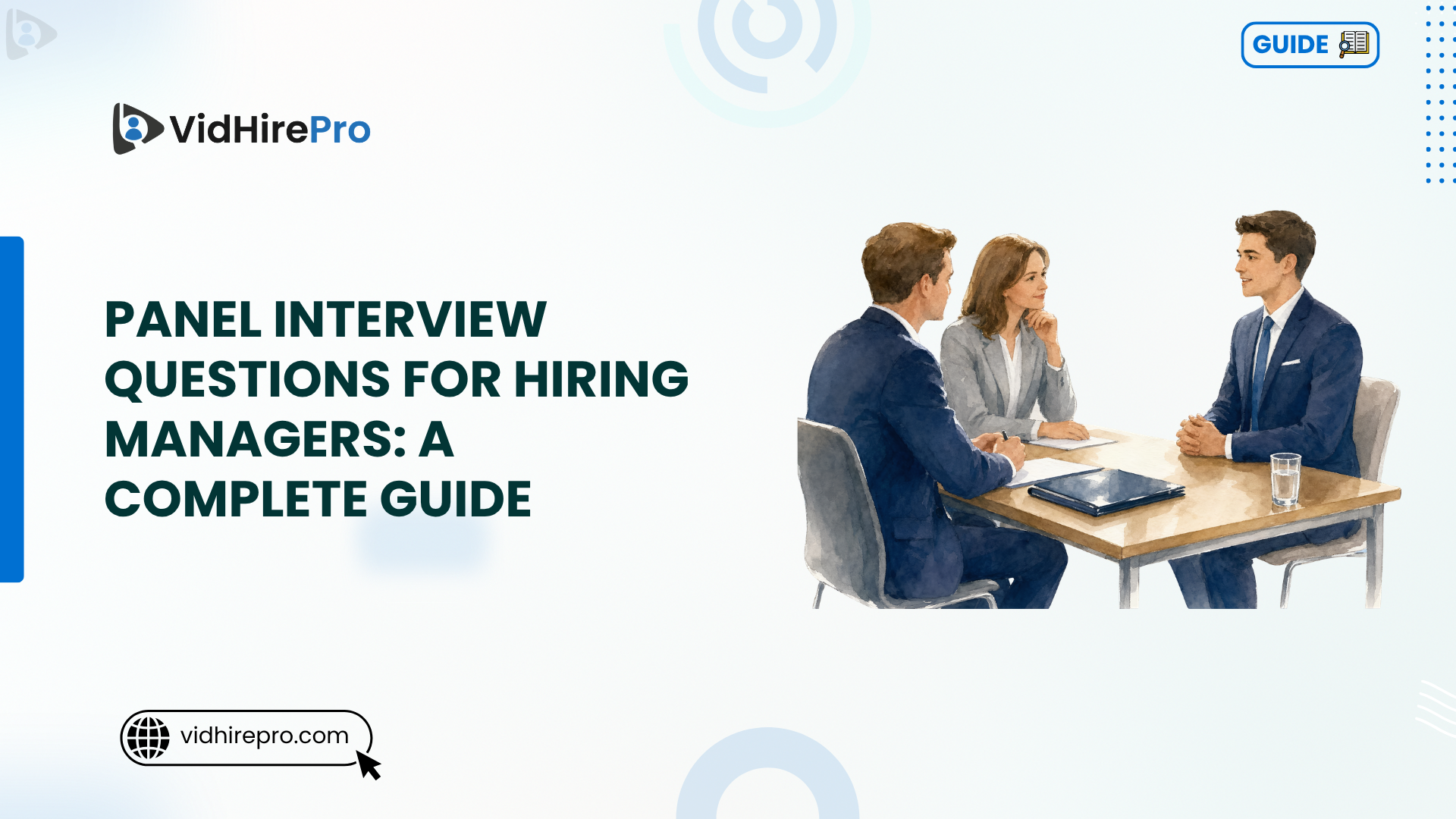
A panel interview is a hiring format where multiple interviewers meet with a single candidate at the same time to ask questions and evaluate responses together. Hiring managers use this format to reduce individual bias, speed up decision making, and get a fuller picture of how a candidate performs under real pressure.
Rather than relying on one person’s read of a candidate, a panel brings together different perspectives from the hiring manager, future teammates, and sometimes a senior leader. Everyone hears the same answers, which makes comparing candidates easier once interviews wrap up.
Key Benefits of Panel Interviews
Panel interviews give you a shared, real time view of how a candidate thinks and communicates. Because every panelist hears identical answers, there is far less room for miscommunication between interview rounds.
They also save time. Instead of scheduling three or four separate one on one interviews across different days, you can gather the same insight in a single session, which keeps your hiring timeline tight and your top candidates engaged.
Common Challenges Hiring Managers Face
Panel interviews are not without friction. Scheduling multiple interviewers at once is often the biggest headache, especially across busy teams or different time zones.
Candidates can also feel intimidated facing several interviewers at once, which sometimes affects how naturally they respond. Without clear structure, panels can devolve into disorganized questioning where panelists overlap one another.
How to Structure a Panel Interview
A well run panel interview follows a clear plan built around the right people, defined roles, and a shared way of scoring answers. Structure is what separates a productive panel from a confusing one.
Before you schedule anything, decide who needs to be in the room, what each person is responsible for asking, and how you will compare notes afterward.
Choosing the Right Panel Members
Keep your panel focused and intentional. Three to five interviewers is usually the sweet spot, including the hiring manager, a peer from the team, and someone the candidate would work closely with day to day.
Avoid inviting people just because they are curious about the candidate. Every panelist should have a clear reason to be there and a specific area to assess.
Assigning Roles and Question Categories
Each panelist should own a distinct question category so the interview does not repeat itself. For example, one person might focus on technical skills, another on collaboration, and another on leadership potential.
This division keeps the conversation efficient and gives you broader coverage of the candidate’s experience without anyone stepping on another panelist’s questions.
Setting a Consistent Scoring Rubric
Agree on a scoring rubric before the interview starts, not after. A simple one to five scale across categories like communication, technical ability, and culture fit keeps feedback objective and easy to compare.
When every panelist scores against the same criteria, you remove much of the guesswork and personal bias that can creep into hiring decisions.
Top Panel Interview Questions for Hiring Managers to Ask
The right panel interview questions reveal how a candidate thinks, communicates, and handles real work scenarios. Strong panels blend technical, behavioral, and culture focused questions so every dimension of the role gets covered.
Below are proven categories and example questions your panel can pull from directly.
Role Specific and Technical Questions
These questions confirm the candidate can actually do the job. Ask things like “Walk us through how you would approach this specific challenge in the role” or “What tools or methods have you used to solve a similar problem before.”
Technical questions should map directly to the responsibilities in the job description, not generic industry trivia.
Behavioral and Situational Questions
Behavioral questions predict future performance based on past actions. Try asking “Tell us about a time you disagreed with a manager and how you handled it” or “Describe a project that failed and what you learned from it.”
Situational questions work well too, such as “How would you prioritize three urgent deadlines landing on the same day.”
Culture Fit and Team Collaboration Questions
Culture questions assess whether a candidate will thrive within your team’s working style. Ask “What kind of team environment helps you do your best work” or “How do you usually handle feedback from a peer versus a manager.”
These questions help you gauge alignment without asking anything invasive or unrelated to the job.
What Questions Should Panel Members Avoid Asking?
Panel members should avoid questions that touch on protected personal characteristics or simply repeat what another panelist already asked. Both mistakes waste time and expose your company to unnecessary legal and reputational risk.
Every panelist should walk in knowing exactly what is off limits and what has already been covered.
Illegal or Discriminatory Questions
Never ask about age, marital status, religion, disability, pregnancy, or national origin, even indirectly. Questions like “Do you have kids” or “Where are you originally from” can create legal exposure and make candidates feel unwelcome.
Train every panelist on these boundaries before the interview, not during it.
Repetitive or Redundant Questions
When panelists do not coordinate beforehand, candidates often get asked the same question three different ways. This wastes valuable interview time and can frustrate strong candidates who feel like no one prepared.
Assigning clear question categories, as covered earlier, solves this problem before it starts.
How Can Hiring Managers Keep Panel Interviews Fair and Consistent?
Hiring managers keep panel interviews fair by using the same evaluation criteria for every candidate and actively watching for bias among panelists. Consistency is what makes it possible to compare candidates honestly instead of relying on gut feeling.
Fairness has to be built into the process, not added as an afterthought once interviews are underway.
Standardizing Evaluation Criteria
Use the same scorecard, the same core questions, and the same weighting for every candidate in the role. This makes it far easier to defend your hiring decision later and ensures no candidate is judged against a different bar.
Written criteria also help new panelists get up to speed quickly, since they are not relying on unwritten expectations.
Reducing Bias Among Panelists
Encourage panelists to score independently before discussing candidates as a group. This prevents one confident voice from swaying the entire panel before everyone has formed their own view.
A brief bias training session for new interviewers goes a long way toward keeping evaluations grounded in evidence rather than assumption.
Running Smarter Panel Interviews with VidHirePro
Coordinating calendars, keeping questions organized, and comparing feedback across panelists can turn hiring into a logistical mess. VidHirePro removes that friction from every stage of the panel interview process, so your team works from one connected platform instead of scattered notes.
Structured Video Panel Interviews
VidHirePro lets your panel conduct structured video interviews without the scheduling back and forth of coordinating everyone’s calendar at once. Candidates can complete video responses on their own time, and panelists review the same recordings, which keeps evaluations consistent no matter when each person watches.
Centralized Scorecards and Feedback
Every panelist submits feedback directly inside VidHirePro using a shared scorecard, so comparing candidates takes minutes instead of days. No more chasing feedback over email or trying to remember who said what.
Faster, More Confident Hiring Decisions
With every response, score, and comment stored in one place, hiring managers move from interview to decision far more quickly, which matters most when your best candidates have other offers on the table.
Final Thoughts on Panel Interview Questions for Hiring Managers
Great panel interviews do not happen by accident. They come from thoughtful preparation, clearly assigned questions, and a consistent way of scoring every candidate.
Key Takeaways
The strongest panels are small, focused, and built around clearly defined roles. Question categories should cover technical skill, behavior, and culture fit, while every panelist scores against the same rubric to keep decisions objective and defensible.
Next Steps for Your Hiring Team
If your team is still coordinating panel interviews through scattered emails and mismatched notes, it is time for a better system. Give your hiring managers the structure, consistency, and speed they need to hire with confidence. Book a demo with VidHirePro today and see how much smoother panel interviews can be.